What we are building

Technology designed around real social challenges.

Our product is social impact software: technology built with communities for public benefit. The work below is a sample of what we have been building and delivering, shown with its current status, safeguards and limitations.

Status labels we use:Live pilot with a local authorityAvailable for deliveryIn developmentPartnership discussions open

Where we concentrate

Four areas where technology can reduce harm rather than multiply it.

01

Online harms and AI risk

Grooming, sextortion, image-based abuse and the newer risks young people meet first: deepfakes, synthetic imagery and voice cloning. Taught in plain terms, as subject matter young people can actually use.

02

Violence against women and girls

Technology-facilitated abuse is now part of nearly every pattern of coercive control. We work on prevention, education and tools that support women and girls directly.

03

Safer journeys and public space

Confidence to travel, to walk home, to be in public space. Our product work is aimed at the moments where people feel most exposed and least supported.

04

Digital skills and media literacy

Recognising manipulation, understanding what a platform is optimising for and knowing what to do next. Practical literacy, not lectures.
Live pilot with a local authority

Community safety intelligence for local authorities

Challenge
Community safety teams plan with official records that arrive late, sit across separate systems and miss much of what communities actually experience. The picture they need is fragmented exactly when decisions need to be quick and defensible.
Who it is for
Community safety, violence-reduction and youth-safety teams in local authorities; the safety partnerships and community organisations around them.
Intended outcome
A live, honest picture of local safety that helps teams spot patterns earlier, target resources where they are needed and evidence the decisions they make.
Role of technology
A secure data interface for local authority teams. Official data and carefully governed community insight come together as live maps, patterns and trends, with source, age, coverage and confidence shown for every layer. It exists to inform planning and earlier response. It is not an emergency service, and no data can make any place risk-free.
Participation
Paid co-design sessions with young people and frontline practitioners shape what is shown, how concerns are reported and what happens to a report. Participation is voluntary and explained in plain language.
Data sources
Public open data, partner-provided resource information and community-reported concerns, kept separate and labelled with source, age, coverage, verification and confidence.
Safeguards
A DPIA before any live location or community report is processed. Geolocation off by default, especially for children. Active location use obvious and temporary. Lowest precision and shortest retention that achieves the task. Moderation, duplicate-report, malicious-report and safeguarding escalation designed before launch. Emergency signposting with a clear statement that this is not an emergency service. Full guardrails.
What is known
The interface is built and live with one local authority under a pilot licence. Practitioners describe a gap between official incident records and lived experience of places, and community reports may be incomplete, delayed or unverified, so every view says so.
What is not yet known
What the pilot changes about day-to-day decisions, how reporting bias varies by area and group, and how to present uncertainty so that low-reporting areas are not read as safer.
Limitations
One pilot deployment so far and no independent evaluation yet. We do not publish partner names or operational detail, and the interface is never a source of safety guarantees.
Partnership route
Local authorities, VRUs and safety partnerships that want a governed pilot licence; community organisations that could host co-design.
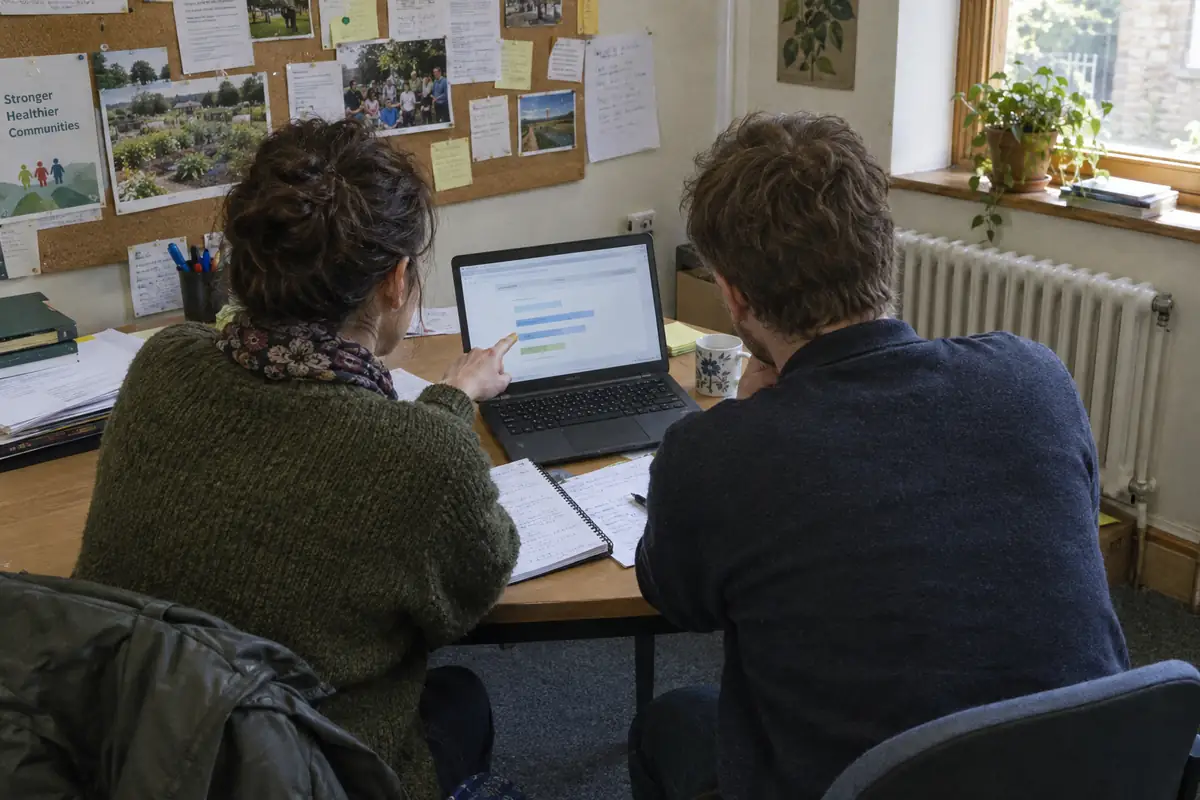
Two practitioners discuss a simple angled data view on a laptop in a modest community office.
Available for delivery

Online safety learning

Challenge
Young people meet pressure, manipulation and conflict online before anyone has talked with them about what it looks like or where to go for support. The newer risks reach them first: deepfakes, synthetic imagery and voice cloning.
Who it is for
Young people in schools, pupil referral units, youth settings and community organisations; the practitioners who run sessions with them; the councils and charities that commission the learning.
Intended outcome
Young people who can recognise harmful situations, talk about what they see and know where to go for support.
Role of technology
Interactive, discussion-led workshops in schools, colleges, pupil referral units, youth services and community settings. They cover online harms and how they escalate, AI risks in plain terms, healthy relationships online, and what to do next: reporting, evidence and support routes, without shame. Printed cards and a projected interface get groups talking about what they would do. We also run sessions for staff, from teachers and youth workers to local authority, housing, health and transport teams, on what young people are actually encountering and how to respond to disclosures. Every programme is written for the setting rather than delivered from a shelf.
Participation
Scenarios are developed and revised with young people. Sessions are facilitated, not lectured. Groups decide together how they would respond and see how their choices compare.
Data sources
No personal data is collected from participants during a session. Optional anonymous feedback is used to improve content and to report knowledge, confidence and intended action.
Safeguards
A safeguarding brief for every setting, a named lead, a route for disclosures made during a session, age-appropriate content and facilitator training. See safeguarding.
What is known
The format is delivered in person and is ready for schools, pupil referral units and youth settings with a facilitator. Measures cover knowledge, confidence, intended action and support awareness.
What is not yet known
Observed behaviour change, help-seeking and sustained change over time. We will report these only when a measurement design supports them.
Limitations
Attendance is not an outcome. Early measures are self-reported and are published as participant feedback, not as verified outcomes.
Partnership route
Schools, pupil referral units, youth services, councils and charities can commission workshop delivery, staff training or license the materials with facilitator training.
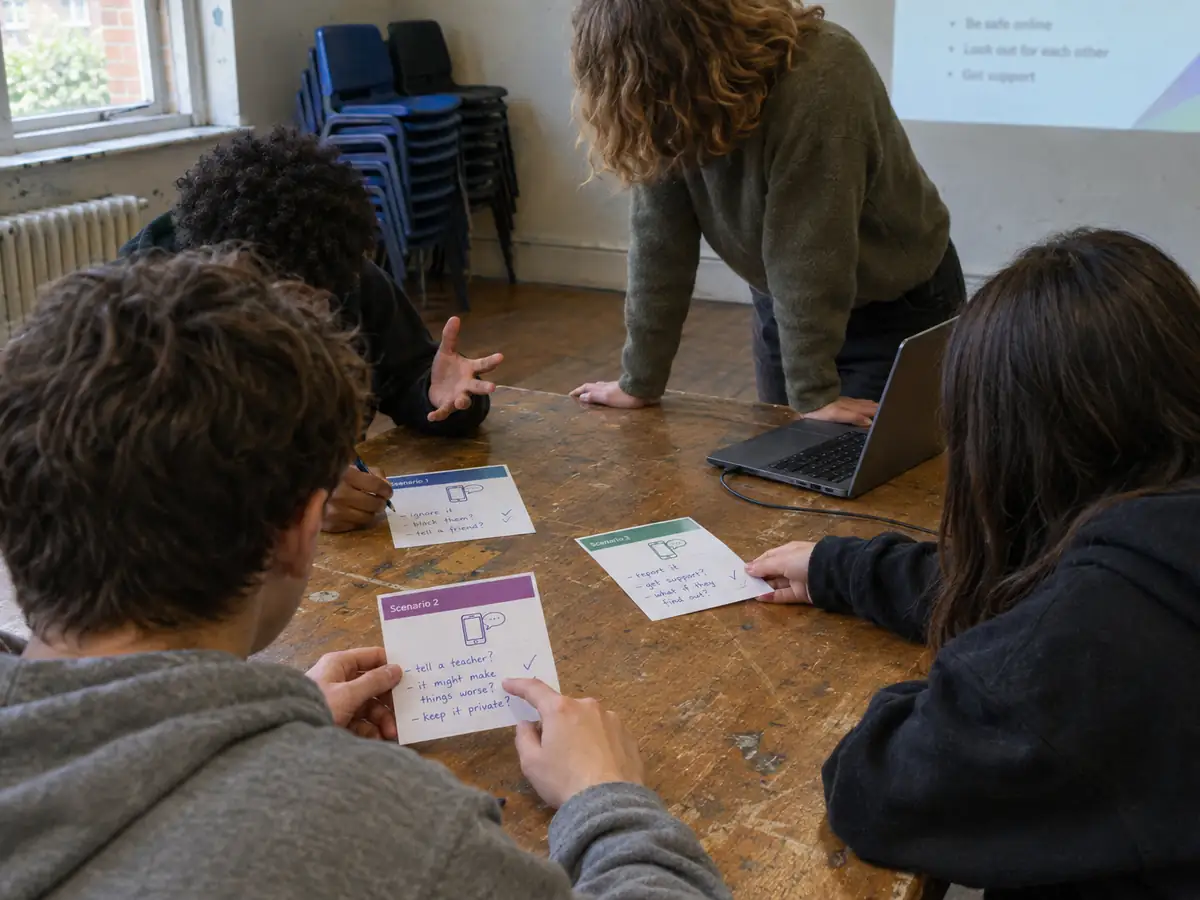
Young people compare handwritten scenario cards around a table while a facilitator leans in to listen.
Partnership discussions open

Opportunity and support access

Challenge
Local opportunities and support exist but are hard to find, understand and use, especially for people on older phones or limited data.
Who it is for
Young people and families looking for local support and opportunities; councils, hubs and charities that publish and run them.
Intended outcome
Local opportunities and support that are easier to find, understand and use, with fewer people dropping out between hearing about a service and reaching it.
Role of technology
Digital services that make local opportunities and support easier to find, understand and use, built for older devices and slower connections and designed to work alongside existing systems rather than replace them.
Participation
Co-design with young people and frontline practitioners on language, categories and what a useful listing looks like. Paid participation for substantial contribution.
Data sources
Partner-provided service and opportunity information, with a clear, checked source for each listing. No profiling.
Safeguards
Data minimisation, plain-language privacy information for young people, accessibility to WCAG 2.2 AA, and clear signposting to urgent support.
What is known
Practitioners describe duplicate directories and out-of-date listings as the main failure mode. Keeping listings current matters more than features.
What is not yet known
Which local partners would own the information, how it links to Young Futures Hubs and existing council services, and how to measure task completion and referral outcomes.
Limitations
We are exploring this area with prospective partners. Nothing is built or deployed.
Partnership route
Councils, hubs, charities and consortia that want a technical and delivery partner. Partner with us.
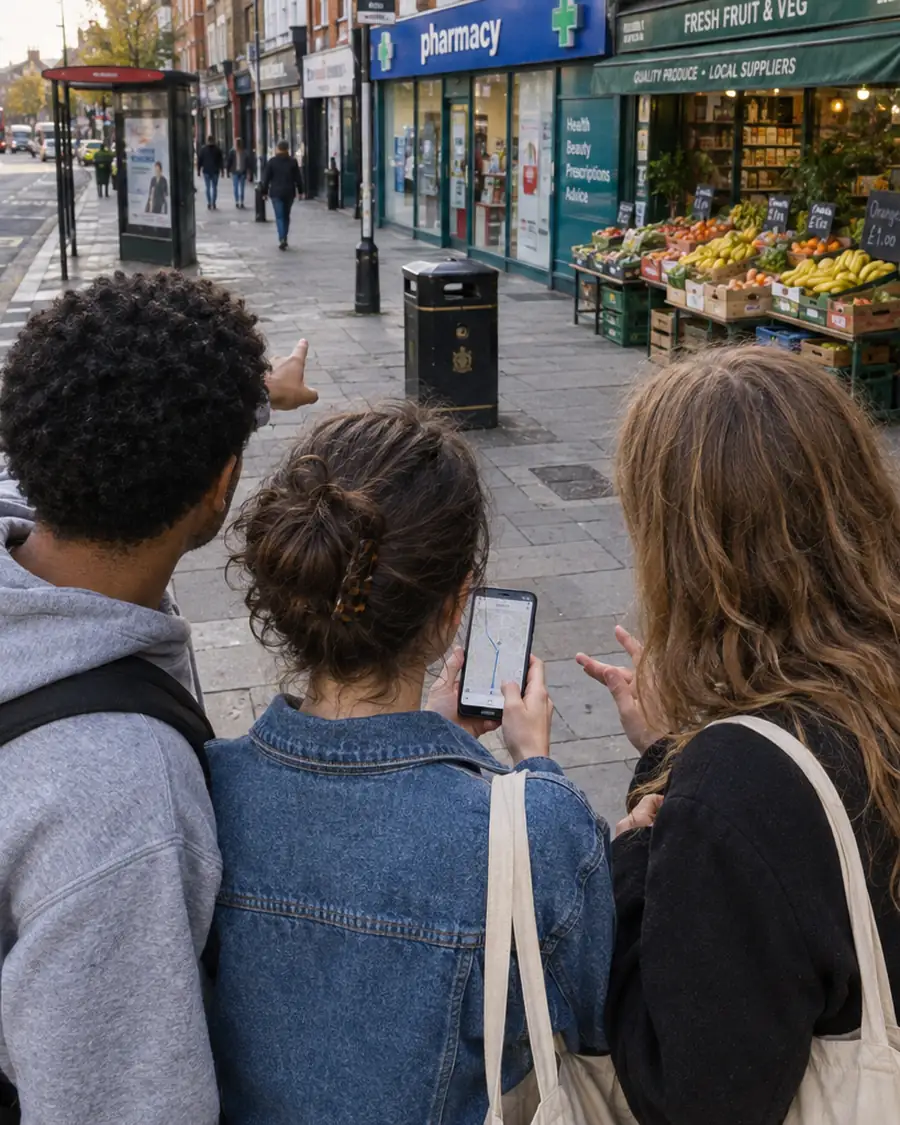
Three young people look at a phone together on an ordinary London high street.

Safety technology, in development

We are developing safety technology for women, girls and young people, tested with the people it is designed for.

We are deliberately quiet about the detail until it has been tested properly. What we can say is how it is built: privacy first, minimal data collection, co-designed with young people and practitioners, and evaluated honestly.

Commissioners, schools and safeguarding leads who would like to be involved in testing are welcome to get in touch.

The empty interior of a London bus at night, windows misted, streetlights outside.

Most harm arrives quietly, on a small screen, late.

How we describe safety data

Live views built from official data and community-reported concerns, always shown with their source, age and limitations. No data can make any place risk-free.

Reports may be incomplete, delayed or unverified. We say so wherever they appear.

Talk to us about prevention work or training

Whether you are commissioning prevention work, booking training for a school or youth service, or exploring a pilot, send a short email and a person from the team will reply.

We reply within three working days.