What we do

We give young people and communities a real say in the technology built for them.

Their experiences shape what we design, so the software works for the people it is meant to help, not just the organisations that buy it. We work in schools, pupil referral units and youth settings, so we hear directly from young people most software companies never meet.

We know a lot about

  • Online harms and AI risk
  • Violence against women and girls
  • Safer journeys and public space
  • Digital skills and media literacy
  • Children and young people
  • Youth participation and co-design
  • Community safety data
  • Safeguarding in digital services
  • Local authority and public service delivery

We can support you with

Six ways we help organisations tackle social challenges, each one shaped with the people it affects.

Community safety intelligence

Need a clearer picture of what is happening in your area? Our secure data interface brings official data and community insight together as live maps, patterns and trends, so your teams can see where to focus.

See the detail

Online harms workshops and training

Interactive in-person sessions for young people in schools, pupil referral units and youth settings, plus training for the staff who support them. We cover grooming, sextortion, deepfakes and more, in language young people actually use.

Book training

Bespoke social impact software

Got a social challenge an off-the-shelf product cannot solve? We design and build the right tool with the people it affects, from case management and referrals to partner portals.

Start something new

Outcome and impact reporting

Want to know whether your programme is making a difference? We build tools that measure outcomes consistently across providers and show funders and communities what is changing.

Discuss evaluation

Youth co-design and engagement

Want young people to shape your service, not just review it? We run paid, safeguarded co-design sessions and show participants what changed because of them.

See our approach

Partnerships and learning

We work alongside funders, councils and charities on pressing social issues, bringing technical delivery, responsible data and the voices of young people to the table.

Explore a partnership
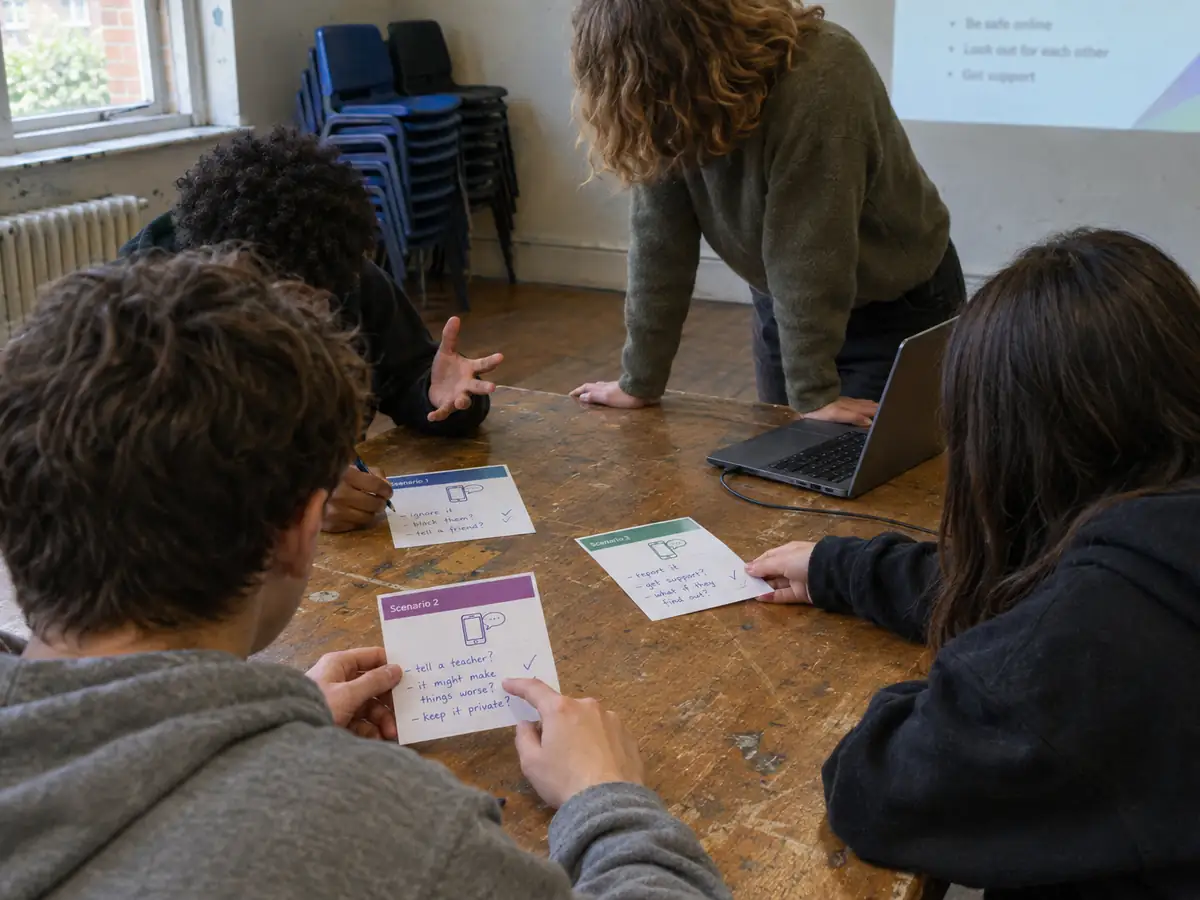
Young people compare handwritten scenario cards around a table while a facilitator listens.

Who we work with

Different visitors bring different first questions. Here is where each conversation usually starts.

Council or VRU commissioner

Can this improve safety or reveal local need without creating risk? Start with outcome, data provenance, safeguarding, accessibility and procurement readiness.

Discuss a local challenge
Charity leader

Will this help people and fit our service capacity? Start with plain benefit, implementation support, staff training and data boundaries.

Talk about an existing tool
Funder or foundation

Is the work community-shaped, additional and capable of learning? Start with participation method, theory of change, legal status, partnership route and evidence plan.

Talk about funding
Young person or community member

Will people like me be respected, protected and paid for meaningful input? Start with plain language, privacy, safeguarding, opportunities and feedback on what changed.

See opportunities
Policy or research professional

Can the insight be interpreted responsibly? Start with method, sample limitations, source labels, confidence, bias controls and governance.

Discuss an insight project

Social value built into every project

Every project should leave something good behind for the community it serves. We agree specific, measurable commitments with you rather than general claims, aligned with the themes in the government’s Social Value Model (PPN 002).

  • Paid co-design hours for local young people.
  • Work placements, mentoring or entry-level digital opportunities linked to the project.
  • Accessible training for local practitioners and community organisations.
  • A percentage of project spend with local or mission-aligned suppliers.
  • Published community feedback and “you said, we changed” records.
  • Data minimisation, storage reduction and measured page or service efficiency.
  • Open learning shared with the sector where safeguarding conditions permit.

Three ways to work together

Use an existing tool, build something new or partner with us. Whichever route you choose, the people affected are involved from the start, and funding and governance are clear from the first conversation.

Route 01

Use an existing tool

Use an existing YFD product in your organisation, borough or programme, with setup, training, safeguarding and ongoing support.

Who it suits
Charities, councils and programmes that want a working tool quickly, with support and costs agreed up front.
What you receive
A written agreement, implementation plan, staff training, safeguarding and privacy documentation, a named support route and a clear exit plan.
How it starts
A short call about your context, then a written proposal covering costs, data boundaries and onboarding.
Talk about an existing tool
Route 02

Build something new

Bring us a social challenge that an off-the-shelf product cannot solve. We will define and build the right response with the people affected.

Who it suits
Councils, public bodies and charities with a specific local need that no existing tool meets.
What you receive
A needs statement, participation plan, service blueprint, tested prototype, DPIA input, accessibility findings, release plan and learning report. See the method.
How it starts
Tell us what is happening, who it affects and what needs to change. We help you scope before anyone commits to a build.
Start something new
Route 03

Partner with us

Combine community knowledge, service experience and technical delivery. YFD can contribute co-design, software, responsible data collection, training and learning.

Who it suits
Charities, community interest companies, public bodies and funded consortia that need a transparent technical and delivery partner.
What you receive
A defined role, written contribution, open learning outputs where conditions allow, and a clear statement of our legal status for funder due diligence.
How it starts
A conversation about the partnership, the lead organisation and what each partner brings. Read about our legal status.
Explore a partnership

What we bring to every project

The technical skills we bring to every project, whichever route you choose.

Mobile apps and web servicesAccessible services for phones and browsers, built for older devices and slower connections, with clear support and emergency signposting where relevant.
Dashboards and insight toolsSimple views that show source, age, coverage, verification and confidence for every figure, so practitioners can interpret responsibly.
Ethical community reportingReporting systems with a defined purpose, data minimisation, moderation, duplicate and malicious-report handling and safeguarding escalation designed before launch.
Learning platforms and workshopsInteractive safety learning with printed and digital scenarios, facilitator guides and measures that go beyond attendance.
IntegrationsConnecting new services to the systems councils and charities already run, without creating another silo or copying data that is not needed.
AccessibilityWCAG 2.2 AA as the target for everything we ship, tested with keyboards, screen readers, zoom and people with access needs.
Training and implementation supportPractical training for frontline practitioners and community organisations, plus onboarding, documentation and a named support route.
Evaluation supportHelp choosing measures before claims are made, separating participant feedback from independently measured outcomes.

Procurement, implementation and support

Early due diligence should not need a meeting. Our procurement and trust page sets out legal, insurance, safeguarding, privacy, security, accessibility, environmental and commercial information. Implementation, training and support arrangements are written into every agreement.

Not sure which route fits?

Tell us what is happening, who it affects and what needs to change. We will help you choose a route before anyone talks about technology or budget.

We reply within three working days.